
Eating Your Own Cooking
“So, you eat your own cooking then?”
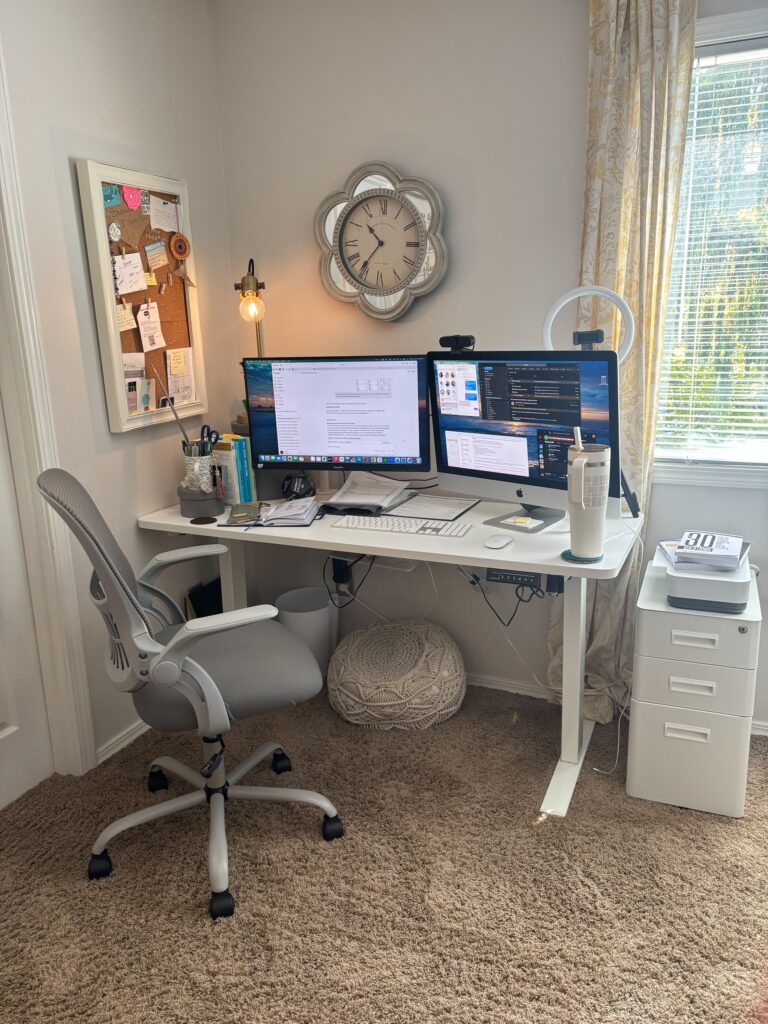
Took me a minute before this new-to-me analogy clicked. My client had asked about the new background on my Zoom calls. Not a tropical island or a well-procured white shelving unit, just my corner office space. That corner office happens to be in the corner of my master bedroom.
Which is a far cry from the bright walls of the ADU above our garage that I used as an office for nearly two years, and from the drab walls of the Regus co-working space I rented periodically too. I gave her the short version. We wanted more income from the apartment, since our kids are getting more expensive by the year, so we rented it out. And the Regus space never delivered the “away from home and productive” feeling I thought it would. I ended up canceling all but the 1-2 days a month I actually had in-person clients.
That’s when he dropped the analogy. You eat your own cooking then?
Yes, I guess I do.
I have no business using cooking analogies. My skills are subpar most weekdays and only slightly better a few times a year. I’m the one asked to bring beverages or a veggie tray to family gatherings. But the point still lands. Chefs taste their food before it goes out. They don’t wait to see if a dish lands without already knowing it should. They eat what they serve.
So here’s the real question, for you and not just for me. Where are you showing evidence of practicing what you preach? Are you eating your own cooking?
What "Eating Your Own Cooking" Actually Means
This isn’t just a coaching or business thing. It’s a “do I actually believe what I say I believe” thing, and it applies to anyone with a financial philosophy, whether you’ve said it out loud or not.
You might believe you should have three months of savings tucked away. You might believe debt is worth getting rid of fast. You might believe you should know exactly what’s coming out of your account every month instead of finding out the hard way. Those are all fine beliefs to hold. The real test isn’t whether you can explain them well. It’s whether your spending, saving, and decisions actually line up with them.
And it’s not just money beliefs. The same test applies to time. You might believe you should be more present with your kids in the evenings. You might believe deep work deserves a protected block on your calendar instead of getting squeezed into the cracks. Those beliefs deserve the same scrutiny as your budget does. Are you actually doing it, or do you just like the idea of yourself as someone who does?
James and I didn’t come up with our story about working our way out of $450,000 in debt because it sounded good on a blog. We lived it first, badly for a while, before it became anything we’d tell another soul. The message came after the mess, not before it.
Authenticity isn’t about being consistent for an audience. It’s about being honest with yourself first. Everything else is just what people see once you’ve already done the work. And your audience can be as big or small as you like. The most important one is the people around your dinner table. Parents, you know what I mean.
Why This Matters More Than You Think
Most people already know what “good” looks like financially. Save more. Spend less than you make. Get out of debt. Track where it’s going. None of that is a secret, and yet the gap between knowing it and doing it is where most of us actually live. That gap isn’t a knowledge problem. It’s an alignment problem.
Take the Regus example. I assumed a co-working space would make me more productive, more “serious,” more official somehow. I didn’t just believe that quietly and let it sit. I tracked how often I used it and what I got done when I was there, and the results told a different story than my assumption did.
And here’s the part I don’t think I fully clocked until later: that wasn’t just a money cost. It was a time cost too. Every day I drove there instead of working from home was time I didn’t get back, on top of the subscription I was paying for the privilege. As an entrepreneur, that’s the trap. You justify the expense because it feels productive, but you never actually run the math on what it’s costing you in dollars and hours combined. So I changed course. Same with the ADU. I wasn’t precious about the space once the numbers made a better use obvious.
That’s the muscle worth building. Testing your own assumptions against your own numbers instead of running on autopilot, or worse, running on image. It’s a lot easier to keep a story about yourself intact than to check it against reality. Eating your own cooking means checking anyway.
How to Start Eating Your Own Cooking
You don’t need a full financial overhaul to start. You need one honest look.
Pick one belief you hold about money, or about time. Something like “I should be putting more into savings,” “eating out less would fix my budget,” or “I should be more present with my kids after work.” Then ask yourself plainly: am I actually doing this, or do I just believe it?
Track it for real. Not vibes, not a rough guess of how the month went. Actual numbers, even the uncomfortable ones. If you’ve never sat down and checked whether your spending reflects your values, that’s a good place to start.
Be willing to change course when your own data contradicts what you assumed. I didn’t love admitting the Regus space wasn’t earning its keep, in money or in time. But the honest answer was more useful than the comfortable one.
A few starting points if you want to try this in the next week: pull up your last 30 days of spending and compare it to what you’d have guessed before looking. Pick one recurring expense you’ve never questioned and ask if it still earns its place. If you’re a parent, try this one: if your kid asked you right now whether your spending matches what you tell them about money, what would you say? Or just ask yourself, out loud if you have to, what you’d tell a friend to do in your exact situation, and notice whether you’re doing that yourself.
What My Coaches Are Eating Too
I’m not the only one on this team putting my own advice to the test. I asked Ashley and Courtney what “eating your own cooking” looks like in their own financial lives.
Ashley is a big believer in paying yourself first, once debt is under control. She’ll be the first to say the right timing for that pivot looks different for everyone, but the sooner you can start building up savings and investments, the better positioned you’ll be down the road. She also swears by a bit of a trick: creating dedicated savings buckets and treating them like additional “bills” in the budget.


Courtney’s approach leans on a few different habits working together. She always rounds up her bill totals when budgeting, which leaves a little hidden wiggle room without her having to think about it. She also squirrels money away into extra savings buckets, similar to what Ashley does, but she likes to put some of them somewhere a little harder to access, whether that’s a separate account she doesn’t check regularly, a locked-up cash stash, or ideally a high-yield savings account. The point isn’t the exact vehicle, it’s having small safety nets in more than one place.
She’s also a big believer in budgeting and rebudgeting often. Once a month works fine once you’re debt free and things are stable, but during tighter seasons she ran her numbers weekly just to stay on track. And maybe her biggest habit: learning to live a month ahead, so her paycheck covers the month coming instead of the month she’s in. That gap gives her room to adjust or pivot when something unexpected pops up, without having to dip into her emergency fund.
The Proof Is in the Testing
The people worth listening to, on money or anything else, are usually the ones still testing things on themselves. Not the ones with the most polished answer, but the ones willing to find out if their own answer holds up.
But testing yourself alone only gets you so far. This is exactly where coaching earns its place. It’s a lot harder to talk yourself out of an uncomfortable truth when someone else is looking at the same numbers with you. Accountability is where the real magic happens, not because a coach tells you what to do, but because someone is in your corner making sure your actions actually match what you say you believe.
So no, my Zoom background isn’t a tropical island or that great blue wall my husband painted in the apartment. It’s a corner of my bedroom, because that’s what made sense once I looked at the real numbers instead of the story I’d been telling myself. Small proof, but proof all the same.
If you’re ready to test your own financial assumptions instead of just holding onto them, that’s exactly the kind of work we do together. Start with a free strategy call and we’ll find where your gap is, together.
Thank you for joining me on my journey to influence.
P.S. Curious where your own numbers might tell a different story than your assumptions? Book a free call: myjourneytoinfluence.com/schedule-a-call.


Sign up below to get a weekly email with tips, tricks, and truth about intentionality with your time, talent, and money.